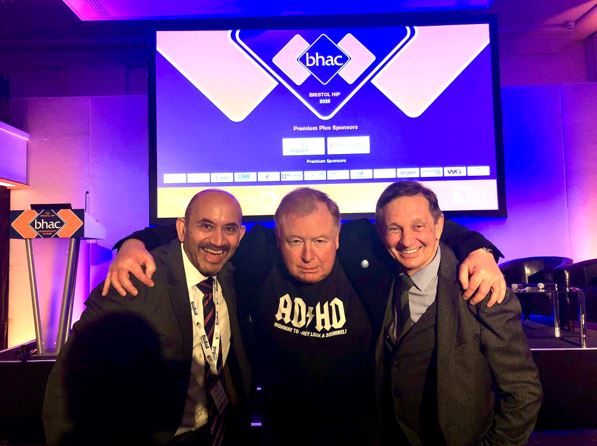
This was another informative two-day meeting, directed by Prof Mez Acharya, in the Bristol Room at the Delta Hotels Bristol City Centre.
Many varied subjects were covered, including problems relating to increased periprosthetic fractures with cemented stems. There is evidence that a specific brand of stem with a taper-slip design has an increased risk of femoral fractures when implanted in the femur.The importance of optimum anatomical positioning of the acetabular cup was a repeated topic throughout the various presentations, with a 32mm ceramic femoral head deemed the best option for most patients. Revision surgery sessions and talks on complex surgery for bone cancers provided further insight into the use of different techniques, various implants and the use of a porous collar with long stemmed revision femoral implants.
Prof Ritchie Gill provided an insightful talk on the orthopaedic boom - the use of robotics in surgery and the various clinical applications of AI. There was a word of caution: a significant majority of the developed AI tools lack external validation and are associated with significant costs, which will ultimately impact on healthcare worldwide.
Jeremy Latham spoke on the renaissance of resurfacing arthroplasty. The ceramic-on-ceramic bearing, and alternative bearing surfaces may have a role to play in the future, particularly in those patients with abnormally shaped proximal femurs.
David Langton presented on his groundbreaking research from ExplantLab, which is supported by funding from the Arthroplasty for Arthritis Charity.
Derek Bennett delivered a wonderful talk on the surgical expertise provided to hospitals in Vietnam. This has improved the quality-of-life for patients who have undergone surgery and at the same time has changed the face of the delivery of orthopaedic care in the hospitals which were supported on an annual basis.
Callum McBryde, Johan Witt and Pramod Achan all presented on aspects of treatment of the developing hip and offered the delegates insights and knowledge to treat and manage this group of patients.
Prof Vikas Khanduja talked on the development of the “Smart Hip” which has enabled the hip unit in Cambridge to obtain data about the hip joint and the muscle balance around the hip. The research is in its infancy, with the potential to gain more knowledge about total hip replacements in situ, and this data could be available in the foreseeable future.
An outstanding faculty contributed to the increased knowledge for all the participants at the course. I look forward to the next episode in 2026.